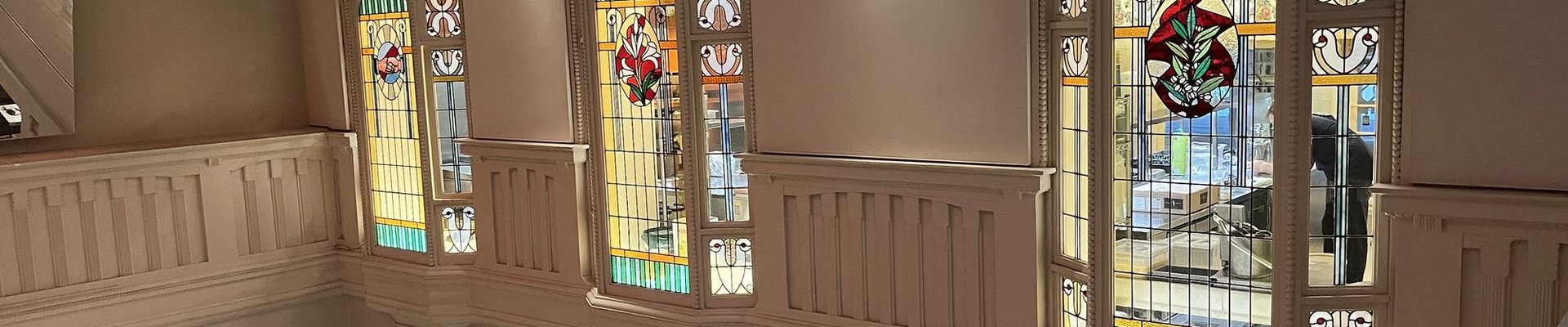
Australia, Belgium, Denmark
Workers' Assembly Halls


The Workers’ Assembly Halls are a proposed serial transnational nomination that represents the international democratic labour movement from 1850-1950.
In Denmark, the component consists of the Workers’ Assembly Hall in Copenhagen. It dates from 1879 and the multifunctional space now houses The Workers Museum. In Belgium, the component is the "Feestlokaal Vooruit" in Ghent. Built in 1914, it was a symbol of the socialist cooperative movement. In Australia, the two components are the Broken Hill Trades Hall and the Victorian Trades Hall (in Melbourne).
Site Info
Official Information
- Full Name
- Workers' Assembly Halls (ID: 6807)
- Status
-
Nominated 2027
Site history
History of Workers' Assembly Halls
- 2025: Added to Tentative List
- Added to tentative list
- 2023: Preliminary Assessment
- 2023: Added to Tentative List
- Added to tentative list
- 2023: Added to Tentative List
- Added to tentative list
- 2023: Added to Tentative List
- Added to tentative list
- Type
- Cultural
- Criteria
- iii
- iv
- vi
Links
- UNESCO
- whc.unesco.org
All Links
UNESCO.org
- whc.unesco.org — whc.unesco.org
- whc.unesco.org — whc.unesco.org
- whc.unesco.org — whc.unesco.org
- whc.unesco.org — whc.unesco.org
Community Information
- Community Category
- Secular structure: Civic and Public Works
Travel Information
Recent Connections
News
No news.
Recent Visitors
Visitors of Workers' Assembly Halls
- Alexander Lehmann
- Argo
- Assif
- Astraftis
- Bill Maurmann
- Can SARICA
- Carlo Sarion
- Caspar
- Christoph
- Damientournay
- Elis
- Els Slots
- gautamiyer23
- henrik_hannfors
- Ingrid
- jonstst
- Lisu Marian
- marc Rouserez
- Philipp Peterer
- Porcho
- Roman Bruehwiler
- Rudegirl
- serghei.belous
- Shandos Cleaver
- Spiceboy
- Squiffy
- Svein Elias
- tony0001
- Tsunami
- Valentina
- Wojciech Fedoruk
Community Reviews
Show full reviews
The Workers' Assembly Halls, a nomination led by Denmark, is one of the more prominent upcoming serial transnational initiatives. It is aiming for inscription in 2027. They represent the international democratic labour movement of the years 1850 to 1950. This isn’t a popular subject in the 21st century, but “we” (the workers in the countries where the labour movement had a significant impact) owe perks like the 8-hour workday and holiday bonuses to them.
Among the 7 proposed Assembly Halls in 6 countries is “De Vooruit” in Ghent, Belgium. It has just appeared on the country’s tentative list (April 2025), and is definitely part of the final selected group that is preparing a nomination and it has received funding to do so from the Flanders government. I visited it on November 9, 2024, on a guided tour.
The ‘Vooruit’ (Dutch for “Forward”) dates from 1913, the year Ghent hosted an International Exhibition. It seemed a good idea to the local socialist movement to celebrate its cause via a grand building, which was to be situated along the main road between the railway station and the city centre. The construction was funded by the eponymous socialist cooperative, which managed a bakery, a brewery, pharmacies, and other businesses aimed at the socialist customer. Workers could use its services against fair prices, to protect them from rampant capitalism.
The building has a very fine facade, but unfortunately, it is completely covered in scaffolding at the moment (works to improve its …
Keep reading 0 comments
After I had an outside view of the Worker’s Assembly Hall in Buenos Aires, I got the opportunity to visit the building with the same purpose in Copenhagen.
The Danish Worker’s Assembly Hall is now part of the Workers Museum. It’s just 3 minutes walking from Norreport metro station and open daily from 10:00 to 17:00.
While, unlike in Argentina, the building is unremarkable from the outside, with an entry to the museum you get access to the actual assembly hall with its impressive banquet hall. As it seems to be custom in Denmark, you first pay a high entry fee (around 17 EUR) and then just walk in without anyone ever checking your ticket. The museum itself is very nice, but the only explanation in English you will find is within the banquet hall and the temporary exhibition in the basement. All other information is Danish only.
The Assembly Hall in Copenhagen was the first in Europe, inaugurated in 1879. It was financed and erected by the Danish labour movement. It included offices and meeting rooms, which are now used as museum exhibition rooms, and the banquet hall. The building is a museum since 1983. The banquet hall is likely the only room that justifies UOV. It was renovated in 2021 and is decorated with wood carvings of traditional professions and a big mural.
I still think these buildings represent a significant stage in human history and deserve their spot on the list, as without …
Keep reading 0 comments