Connected Sites
-
"The introduction of the waterwheel for powering the blast furnace, bellows, and forge to refine iron ore led to the rapid development of the Swedish iron industry." (OUV). See pictures)
-
The Falun Water Wheels refer to massive, historic overshot water wheels, especially the famous Creutz Wheel (15m diameter) and Husberg Wheel, used to pump water and hoist ore out of the deep shafts.
-
Crown Mill in Lyckeby: the mill was an essential part of the naval infrastructure. It was established to grind flour for the Royal Navy
-
At Salins-les-Baines, a water wheel provided the mechanical force needed to pump heavy, concentrated brine (saltwater) from a depth of nearly 250 meters to the surface for evaporation.
-
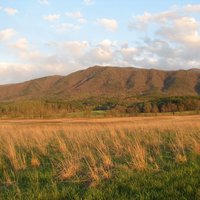
Contains the 19th-century structures for grinding corn/wheat at Cable Mill (Caves Cove) and Mingus Mill (turbine-driven) (link)
-
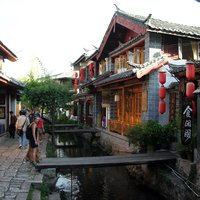
Lijiang's large water wheel at the main entrance is one of the landmarks of the town.
See The Giant Water Wheels in Lijiang Old Town
-
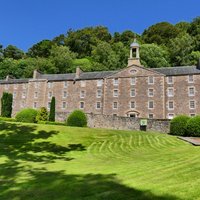
Mill Number Four ... In 1990 a waterwheel was brought from Hole Mill Farm, Fife, and installed on the site of the mill. (wiki) - the ten original water wheels, which drove the mills, were gradually replaced by three water turbines
See www.newlanark.org
-
-
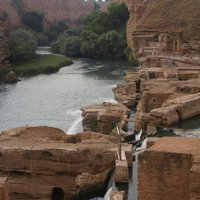
"The site of fourteen mills and waterfalls downstream from the tunnels bored into the cliff, the outfall basin between the cliffs; some mills using traditional equipment are still in operation" (ICOMOS eval). There is a mixture of Vertical and Horizontal wheels.
-
-
-
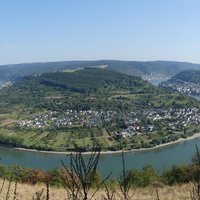
At Boppard a small side valley called the Mühltalbach joined the Rhine. As the name suggests is was a centre for watermills performing a range of grinding tasks including Wheat for flour, Mustard (Senfmühle), Rape and Linseed for oil (Ölmühle), Bark for tanning (Lohmühle) and Sawing for the local boat industry. Some remain ruins whilst others have been converted to restaurants (Fondels Mühle) or modernised (eg the Mustard Mill at Kloster St. Martin,)
-
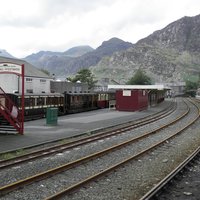
The Dinorwic water wheel is the largest working waterwheel in Britain, located at the National Slate Museum in Llanberis, North Wales. This enormous wheel, over 50 feet in diameter, powered the quarry's workshops with an intricate system of pulleys and belts from the late 1800s until the quarry closed in 1969, and it was restored to working order in 2000
-
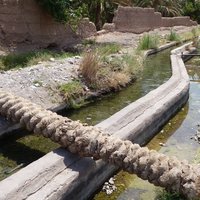
Subterranean water mills (Asiyabs), specifically designed for grain, are a common feature of Qanats, and most of the inscribed ones contain several. E.g from the ICOMOS evaluation for Mozdabad - "Dependant structures included six watermills, one of which survives, a reservoir and a rest house/cloak room." (link)
-
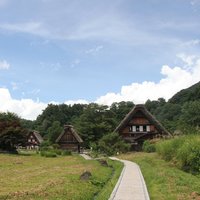
Shirakawa-go contains small-scale wooden mills used by the community for grain and local fodder. (link)
-
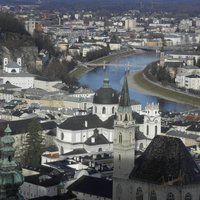
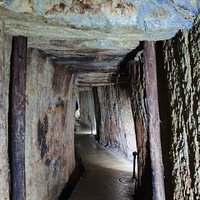
At the Stift St. Peter bakery: "dates back to the 12th century. At that time, a tunnel for the Almkanal was cut through the Mönchsberg to supply the city with water. Directly at the exit of the canal from the mountain, the monastery built a grain mill and also the bakery that is still appreciated today" (link)
-
15 references in the Nomination file to water powered Stamp Mills for Ore Crushing E.g "linearly developed along watercourses, valleys and the main roads, with interdependent relationships with water in the past (former stamp mills, in Roșia Montană, Corna, Ţarina)". The Museum contains preserved and reconstructed Water wheels and Stamping Mills (link)
-
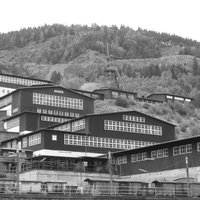
"the water which for hundreds of years set the four underground driving wheels in motion. Three of these waterwheels can still today be seen in their original locations"
See www.rammelsberg.de
-
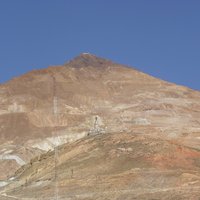
In the 16th C "this area was regarded as the world’s largest industrial complex. The extraction of silver ore relied on a series of hydraulic mills." (UNESCO) In the late 1590s, over a hundred stamp mills operated along the city's main gulch. To ensure a reliable water supply in the arid, high-altitude climate, the Spanish built an intricate hydraulic system to ensure the continuous supply of water from the nearby Kari-Kari mountains to power mill wheels. The mills ("Ingenios") utilized large waterwheels, some as large as 24 feet in diameter, connected to axles that lifted and dropped multiple stamp hammers." (link)
-
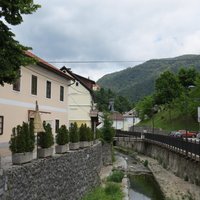
Kamst Water Wheel in Idrija, the "biggest still preserved wooden water wheel of this type in Europe". It was used to pump the pit water from the Idrija Mercury Mine.
See (source)
-
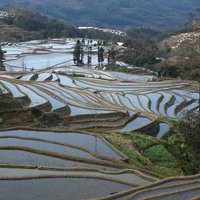
Water powered mills (for grinding grain), and water-operated tilt hammers (for hulling rice) are found in most valleys (AB ev)
-
At Morwellham Quay: "The ore-crushing plants driven by a 32-foot overhead waterwheel can be seen." (wiki)
-
-
The Schwerin Watermill, known as the Schleifmühle Schwerin, is a historic 18th-century technical monument. It utilized water flow to power two water wheels, which operated ancient grinding stones to process bark into pulp for leather production.