Connected Sites
-
-
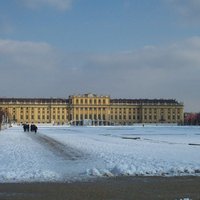
The emperor ordered the area to be fenced and put game there such as pheasants, ducks, deer and boar, in order for it to serve as the court's recreational hunting ground. In a small separate part of the area, "exotic" birds such as turkeys and peafowl were kept. Fishponds were also excavated. During the next century, the area was used as a hunting and recreation ground. Eleonora Gonzaga, who loved hunting, spent much time there and was bequeathed the area as her widow's residence after the death of her husband, Ferdinand II. From 1638 to 1643, she added a palace to the Katterburg mansion, while in 1642 came the first mention of the name "Schönbrunn" on an invoice. (wiki)
-
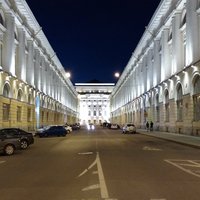
Great Gatchina Palace: The history of the palace dates back to 1765, when Catherine the Great presented this plot of land to her favorite, Count Grigory Orlov, for a hunting lodge.(...) Since Orlov's times Gatchina has also been called "The Hunting Capital of Russia," which is reflected in much of the palace's artworks. (Moscow Times)
-
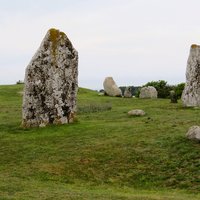
Ottenby Royal Estate (Ottenby Kungsgård) is a historic Swedish royal domain on the southern tip of Öland island, known for its royal hunting grounds
-
-
Palazzina di caccia of Stupinigi
-
-
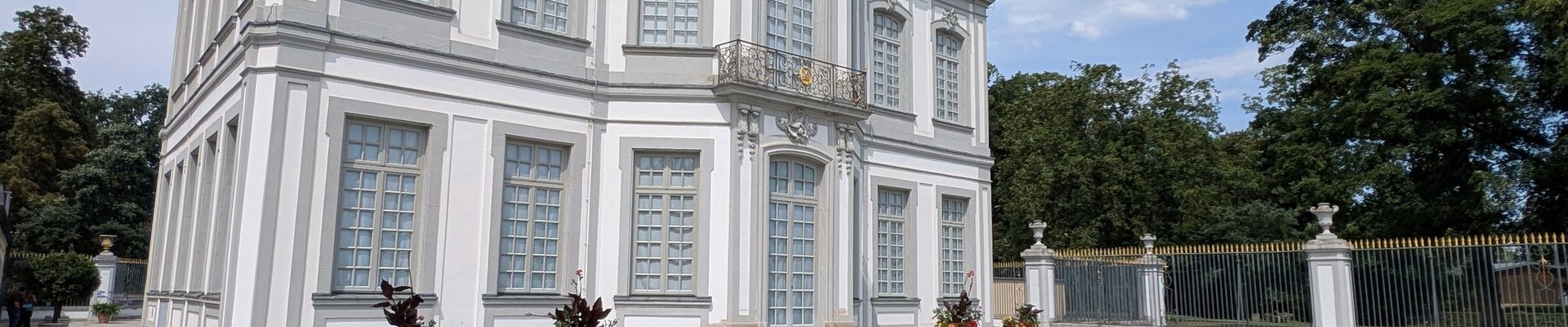
Falkenlust
-
King's House on Schachen
-
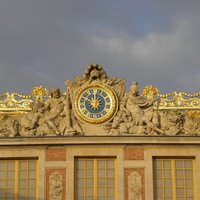
Louis XIII built a hunting lodge at Versailles in 1623. His successor, Louis XIV, expanded the château into a palace that went through several expansions in phases from 1661 to 1715. It was a favourite residence for both kings, and in 1682, Louis XIV moved the seat of his court and government to Versailles, making the palace the de facto capital of France. (wiki)
-
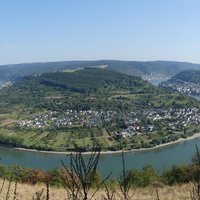
Burg Sooneck " In 1834, the then crown prince of Prussia, Frederick William IV, and his brothers Princes William, Charles, and Albert bought the completely derelict castle and between 1834 and 1861 had it rebuilt as a hunting castle. In the rebuilding, which was designed by the military architect Carl Schnitzler, the historical structures were largely retained with the addition of buildings in romantic style. The Prussian royal crest that remains over the north gate of the castle dates to this period. Disagreements within the royal family and the effects of the revolutions in Germany in 1848 prevented the castle from ever being used as a hunting lodge." (Wiki)
-
-
Eremitageslottet, the baroque royal hunting lodge "still used by the royal family for hunting lunches" (AB ev)
-
"used to be a summer resort and hunting ground for emperors of the Qing Dynasty (1644-1911)"
-
King Carlos I Chalet in the Tapada
-
Château de Chambord
-
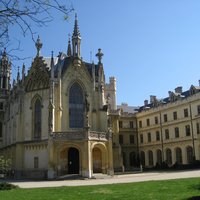
Lovecky Zamecek
-
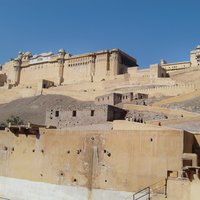
Ranthambore Fort (AB ev)
-
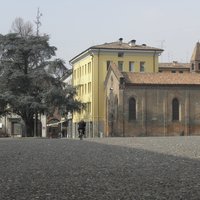
The Castle of Mesola was used by the Este family as a residence during hunting trips in the vast adjacent enclosed park.
See it.wikipedia.org
-
The Hunter's Lodge is the oldest surviving building in the Polish part of Białowieża Forest.
See www.werelderfgoedfotos.nl
-
The Bergpark was built over the earlier hunting lodge estate of Landgrave Moritz of Hesse dating from 1601 (AB ev)
-
A Baroque hunting lodge belonging to the Bishoph of Mainz was erected next to the King's Hall and is still standing
-
-
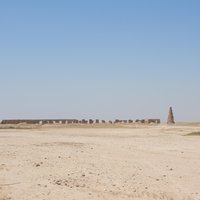
"The new al-Malwiya Mosque, built between 849 and 851, formed part of an extension of the city to the east, extending into the old hunting park. Two new palaces with hunting parks were built in the south, at al-Istablât and al-Musharrahat (the Palace of al-Shah)." (AB ev)