Connected Sites
-
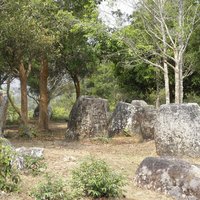
"In the past, looting has been a factor affecting the property, and some jars were removed; however, the State Party considers that this is not a current issue." (AB Ev) – "Looting has been an issue both historically and in the current period, although no activity has been reported at any of the nominated sites in recent decades. The last known example of looting was in 2002-03 at Site 1." (Nomination file, p. 118)
-
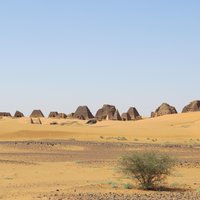
The looting of Meroë’s pyramids by Giuseppe Ferlini in 1834: Ferlini—an Italian surgeon serving in the Egyptian army—was motivated purely by the hunt for gold. He is responsible for the destruction of over 40 pyramids. Finding that the burial chambers were not easily accessible, he ordered his workers to level the pyramids from the top down. In the pyramid of Queen Amanishakheto, he discovered a massive cache of jewelry, which he sold to German royalty. It is now mostly in the Egyptian Museum of Berlin and State Museum of Egyptian Art (Munich).
-
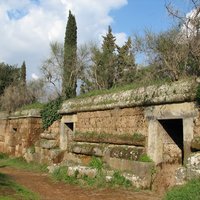
Starting in 1936, the site of the Banditaccia Necropolis in Cerveteri was abandoned and, taking advantage of this state of decay, the place was subjected to numerous clandestine excavations with the aim of finding archaeological finds to be sold privately to collectors. (Wikipedia)
-
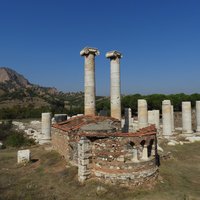
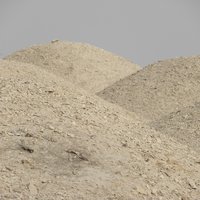
"(...) some past actions have reduced the authenticity of the property, such as (...) looting of the tumuli at Bin Tepe." (OUV) Bin Tepe was looted in Antiquity, primarily during the Roman period: "Roman-era treasure hunters who were remarkably sophisticated. Archaeological excavations by the Sardis Expedition in the 1960s discovered a complex network of Roman tunnels—some only 70 cm wide—that precisely targeted the burial chambers deep within the mounds.". And it saw the theft of what became known as the Lydian Hoard (or the Karun Treasure), between 1966 and 1968. Local villagers and organized bands of treasure hunters used heavy machinery and explosives to blast into chambers. They stole hundreds of gold and silver artifacts, which were eventually smuggled out of Turkey and sold to the Metropolitan Museum of Art (Met) in New York.
-
Necropolis of Anghelu Ruju: "Although, at the time of its discovery in 1903, the tombs were hidden at the ground level, since the first excavations it had been clear that part of them had been looted by explorers "at a very ancient time"". The tombs in the Necropolis of Brodu were also looted in ancient times. (Nomination file, p. 299, 313)
-
"The sites were abandoned before the 13th century AD and modern occupation gradually uncovered the tombs, many of which were opened and looted during the 18th and 19th centuries." (OUV) By the time archaeologists arrived in the 1930s, almost every single major tomb had already been breached.
-
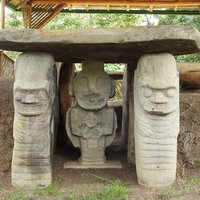
"The San Agustín archaeological sites were abandoned around 1350 AD and rediscovered during the 18th and 19th centuries, which led the looting and disturbance of most of the monumental tombs while looking for grave goods which proved to be very scant." (OUV)
-
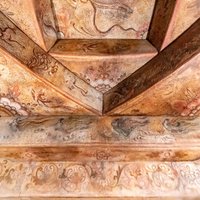
"some of the wall paintings in the tombs were damaged by looting" (OUV)
-
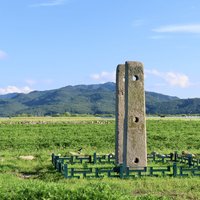
The tombs in Gyeongju were extensively looted and excavated during the Japanese occupation of Korea (1910–1945). This period saw a mix of state-sponsored archaeological "investigations" and rampant illegal plundering by private collectors and antique dealers. Some were returned to Korea after 1965, but thousands of artifacts in Japanese museums or private collections are believed to have originated from Gyeongju's tombs, but because they were removed without proper documentation during the occupation, proving their "stolen" status is often legally difficult.
-
"Excavations proved that grave robbers regularly targeted the burial mounds throughout antiquity." – "Some mounds show signs of grave looting. The majority of these intrusions is believed to derive from ancient times and is hence part of the Dilmun Burial Mounds´ extraordinary history." (Nomination file, p. 131, 155)
-
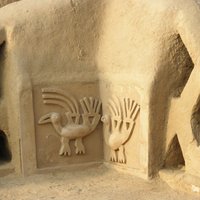
"The ruins of Chan Chan, which were plundered by Spanish treasure hunters and which continue to be by their modern day counterparts, the "huaqueros" , in spite of protective legislation" (AB ev) - Chan Chan was a city of "palaces" that also served as royal funerary complexes. During the colonial period, it became a primary target for specialized, legalized looting companies. The Spanish Crown established a legal framework for compañías de huacas (tomb-robbing companies). These groups were granted licenses to excavate indigenous sites in exchange for giving the "Royal Fifth" (quinto real)—a 20% tax on all found treasure—to the Spanish Treasury. The Larco Museum (Lima) holds one of the finest collections of pre-Columbian gold and silver in the world, including many Chimú pieces that survived the colonial "melting" era. Substantial Chimú artifacts are also held by the Metropolitan Museum of Art (New York), the British Museum (London), and the Musée du Quai Branly (Paris).
-
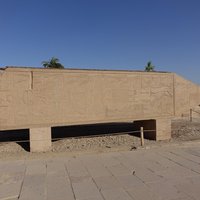
Most of the tombs in Egypt's Valley of the Kings were robbed within one hundred years of their sealing (including the tomb of the famous King Tutankhamen, which was raided at least twice before it was discovered in 1922) (wiki)