Connected Sites
-
The Manica Lunga cryptoporticus (Nomination file, p. 38)
-
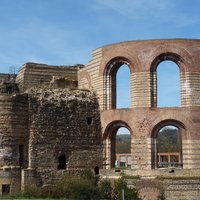
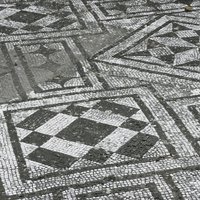
There are many underground corridors such as underneath the Imperial Baths and the Forum. The word cryptoporticus is more explicitly used in connection to information about the Aula Palatina: Originally, the basilica was part of a larger palace complex. Several remains have been identified: a cryptoporticus near the entrance (to the south of the basilica), and parts of ancient mansions - from the first to the fourth century - in the northwest, with some nice black-and-white mosaics. See, e.g. On Imperial Traces.
-
-
-
Domus Aurea and Palatinum
-
"(...) there is a complex of underground elements, including cryptoportici and underground galleries, used for internal communications and storage." (OUV)
-
Abbey Saint-Jean de Sorde: cryptoporticus under the south terrace of the convent (Nomination file)
-
Pompei: House of the Cryptoporticus; Herculaneum: House of the Deers and House of the Mosaic Atrium
-
Monte Sant'Angelo: "At a later date, the rock partition dividing the two caverns was demolished, thus creating a single large space which was reached by means of a new monumental flight of steps (...). At the same time, the monumental flight of steps was linked by two spans, at the central body by a structure comprising five spans; an eighth span on the opposite side of the steps served as an entranceway into the structure which took the form of a 40-metre long arcade, a sort of cryptoporticus which also served the purpose of offering temporary shelter to pilgrims (hospitium)." (Nomination file, p. 215)
-
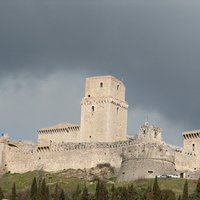
"From the crypt of the original cathedral of Santa Maria Maggiore you descend to an underground environment that corresponds to a Roman house dating back to the first century. AD. Excavations made in the nineteenth century and in the 50s of the twentieth century have unearthed three adjoining rooms and a cryptoporticus, with floors covered with mosaics (...)."
See www.visit-assisi.it
-