The conditions of access to Phonsavan have changed a lot since March 2023 when B.J Esporo Guerrero went there, since it took us 11 hours in an off-road car on a deplorable 280 km road from Luang Prabang, stopping only half an hour for a picnic. Not only is this mountain road long and dusty, but it's also dangerous because of landslides and long trucks. The YouTube video from Next.meridien expedition that Nick and Mathilde posted, and which we had seen in Luang Prabang the day before, illustrates this perfectly. https://www.youtube.com/watch?v=2hkqhLcpRIc.
That said, the hellish road trip is worth it not only for the beauty of the Plain of Jars but also for the breathtaking scenery! According to our hotelier in Luang Prabang, the air link has been reinstated and, indeed, the next morning in Phonsavan, we saw a small plane with about ten seats flying in the sky.
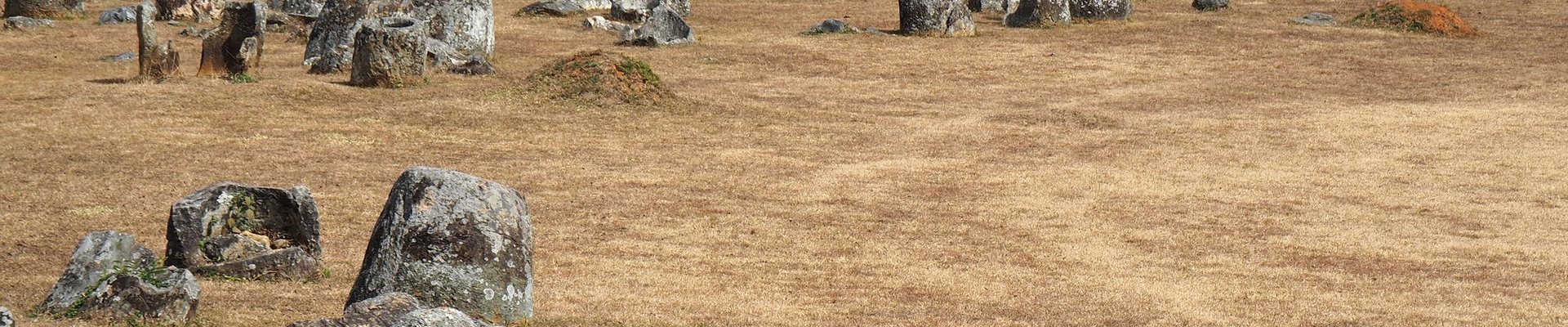
We had a whole day to visit the 3 sites and that's what you should do, sleep at least 2 nights in Phonsavan because it's the furthest site, site 3, which is the most charming. The entrance fee for each site is approximately €2.50 per person. Furthermore, in Phonsavan, there's nothing to do but eat delicious, highly spiced street food featuring chicken feet; you're definitely at one of the ends of the earth, which isn't necessarily a bad thing! I will not go back over the historical description of the sites and the speculations about the function of the jars, which have been confirmed elsewhere at the museum of site 1; my predecessors have already done so very well. What surprised me, however, is that it was a French archaeologist, Madelaine Colani, who (re)discovered it in the 1930s and there do not seem to have been any other serious excavation campaigns since then. All of this is very well explained in English in the small museum. The museum also recounts the continuous bombing of Laos by the Americans during the Vietnam War, a raid every 45 minutes for nine years! I had absolutely no idea about this so-called "secret" war before! Needless to say, I was very surprised! The Plain of Jars did not escape these bombardments, and their traces are still clearly visible, as are the Laotian trenches, giving the site a somewhat eerie atmosphere. (Photo)
There's a sort of small, modern tuk-tuk that takes the few tourists from the museum parking lot to the entrance of the site itself, but I recommend walking because it's possible to make a loop by going over the hill to the left that overlooks the second group of jars. The path is well-marked through the tall grass and signposted from the museum parking lot. At site 1, there's a cave that appears to have been used for cremations, as evidenced by the chimneys carved by the ancient Laotians. Beehives hang from the rock face above the entrance. Along with the snake I nearly stepped on and chased to photograph, the whole scene is quite charming. In the distance, you can see a giant, modern-looking, golden seated Buddha that I recommend visiting at sunset. (introductory photo)
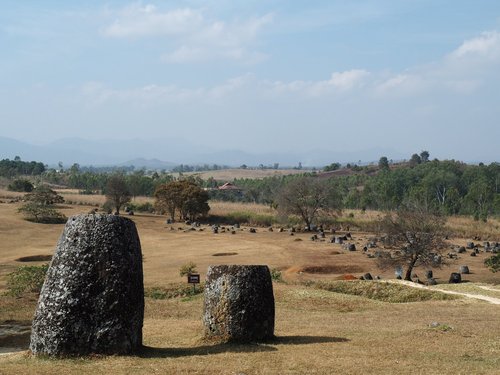
Using Google Maps, with a little searching and paying attention to the 3rd site not indicated from the road, it is easy to find sites 2 and 3, quite close to site 1.
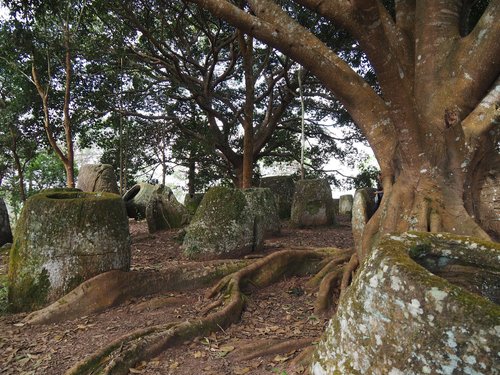
Site 2 is also charming. You have to venture deep into the trees. In fact, the Plain of Jars is more of a hilly region. Be aware that, as at Site 1, there are two separate groups of jars, here divided by a small valley that requires a bit of searching. At the second group, there's a stone lid on the ground with a small carved human figure. The view from this group is beautiful. There's a good chance you'll be alone there. (see photo)
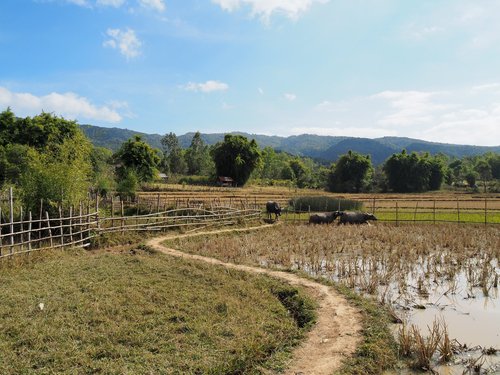
Site 3 is just a few kilometers from Site 2. There are signs along the road. It's the most charming spot because you have to cross rice paddies to get there, climbing a small hill. You'll disturb the buffalo and egrets. (see photo) From a practical point of view, the site has toilets built in the middle of nowhere... amusing! At each site, there's a parking lot and a small hut where the ticket seller waits for you, if he's there, but he's never long!
In short, the effort is worthwhile, as they say, given the beauty of the sites, and considering the two thousand years of age of these jars and the mystery surrounding them. It seemed only right to me that they should be protected and showcased for their universal significance.
Comments
No comments yet.