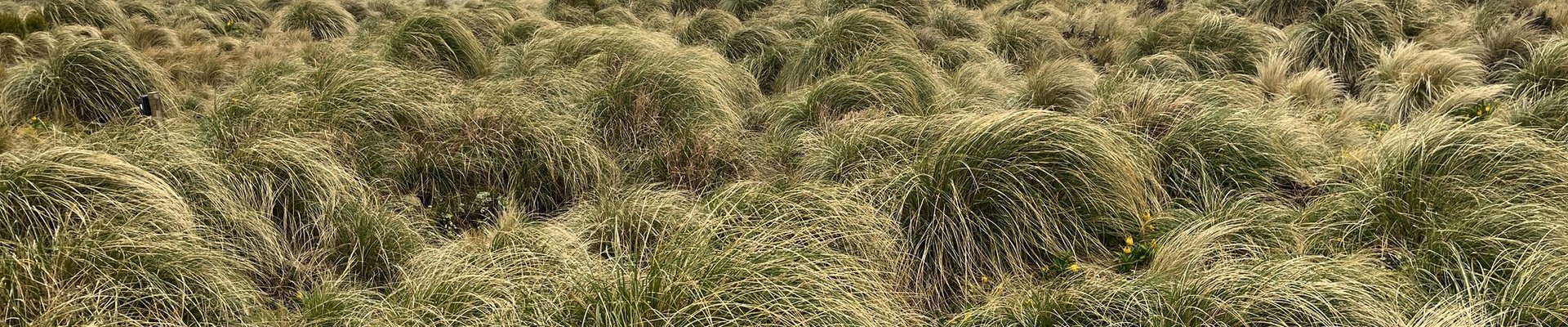
The most southerly of the five New Zealand Subantarctic Islands, the Campbell Island group is volcanic in origin and also has glacial landforms, such as moraines. In the 19th century, it was exploited for sealing and whaling, and a sheep farm was established. All these activities and associated humans have since gone, and rats were eradicated in 2001. Ecologically, Campbell stands out as the most important breeding area of the Southern Royal Albatross and the reintroduced flightless Campbell Island Teal.
Perseverance Harbour zodiac cruise
Clouds gathered around Campbell's hilltops when our ship arrived in the early morning. We were scheduled to take a zodiac cruise in Perseverance Harbour, but it looked like it would be a wet one. So far, we have been very lucky with the weather on this trip, with sun and calm circumstances at the main stops such as Enderby Island and Macquarie Island. At Campbell, we were going to experience what the weather is usually like on the islands: foggy, windy, wet.
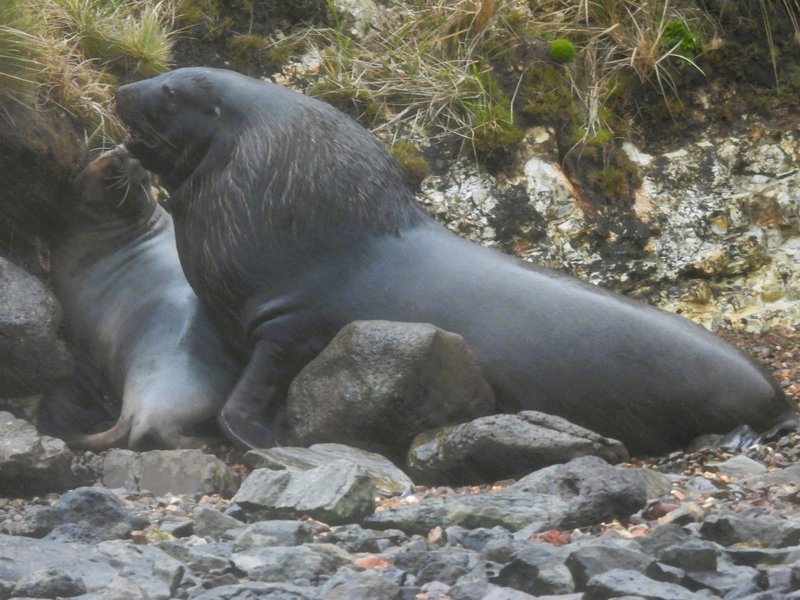
We started the Zodiac cruise in light rain, but we still enjoyed it enough to look out for the Campbell Island specials. First, we dropped by a group of sea lions hanging out together. A bit further down the coast, we saw a large male trying to push a female into a rock so she could not escape him to mate.
Along the shore, we saw a few Campbell shags and some interesting megaherbs. This natural harbour is also home to an odd tourist attraction: The World's Loneliest Tree.
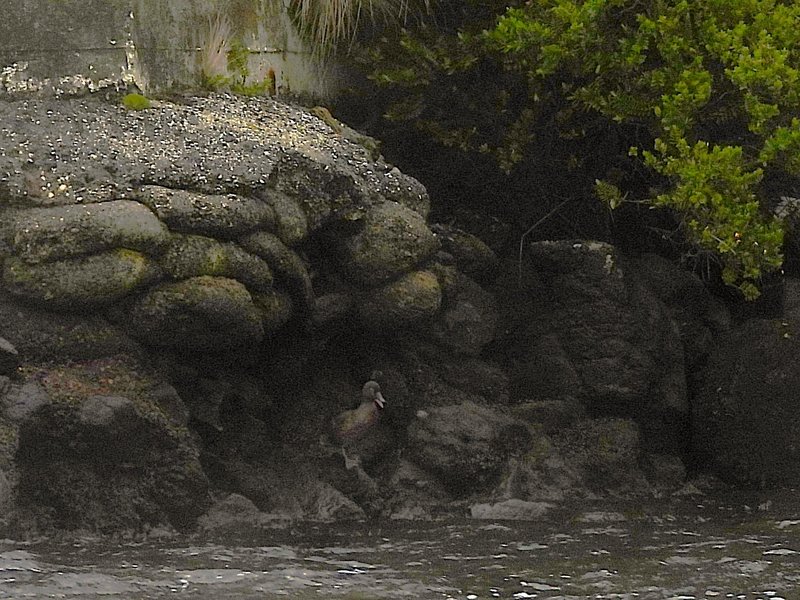
We passed the huts that, in season, are in use by staff of New Zealand’s Department of Conservation (DOC) and the meteorological service. It was exactly at this dock where we found a Campbell Teal, a much-wanted species by the birders on board. Our zodiac guide cautiously described it as a “brown duck”, hoping not to offend them too much. The teal was reintroduced to Campbell Island after the island was made rat-free (the rats were their biggest predators).
After 1.5 hours, it had started to rain persistently and we cut the zodiac ride short. Despite keeping it in a dry bag most of the time, my camera had gotten wet and stopped performing for the rest of the day.
Col Lyall Boardwalk hike
After lunch on board, we were going to explore Campbell on foot. No one, not even the DOC, had been on the island since the end of last season. So we were to find out where the albatross nests were and what the state of the boardwalk was. The Col Lyall boardwalk is a 4 km-long, narrow wooden boardwalk. It was built on tougher terrain than the similar one at Enderby Island, with more altitude to cover. Our biggest enemy here, however, was the wind: gusts almost knocked us off our feet. Actually, the man walking in front of me was knocked over twice (he was tall and thin). Fortunately, on the ground, it is all peat and grass, so you make a soft landing.
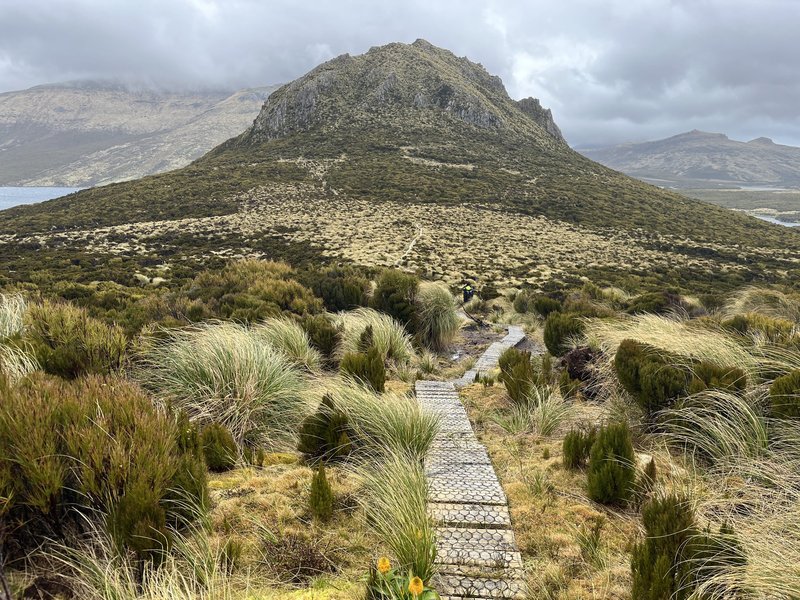
I had picked up a hiking pole at the start of the walk, and it came in handy to lean into when the wind wanted to blow me over. We took the hiking poles, actually, as a countermeasure to aggressive sea lions. We only saw one on this path, but it was right between the DOC huts and did not want to move. One of the guides, after a while, managed to keep it entertained, while we sneaked past behind his back.
The walk uphill took quite some concentration, but I paused enough to enjoy the mountainous landscape with its fjord-like natural harbours. It took us to an area where albatrosses nest and where you can also see them flying very well. Due to the rain and winds, we weren’t able to enjoy them as much as we had on Enderby Island. The birders were happy though, as our bird guide also managed to find them a Campbell snipe. This small bird has profited from the eradication of rats on the island as well.
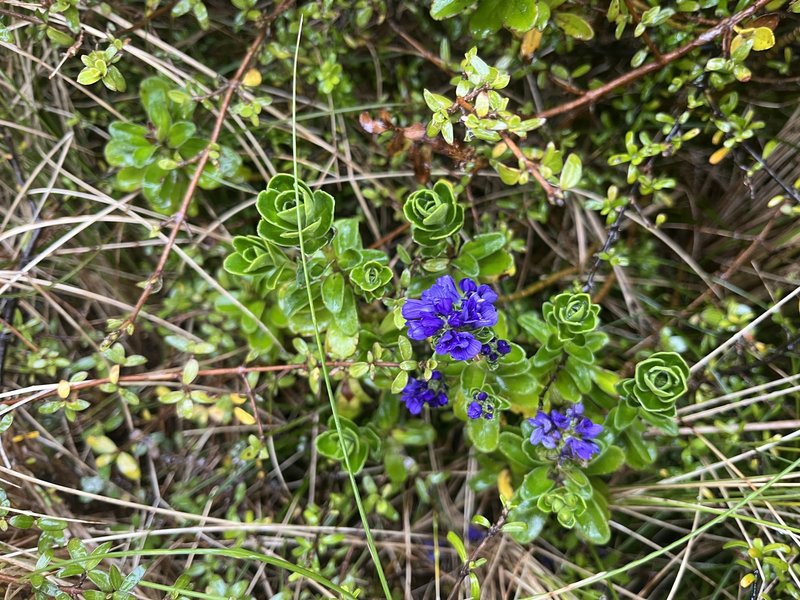
I took it slow on the way back, trying to look for interesting plants. I’d say the plant life (including megaherbs) is as interesting here on Campbell as on Enderby Island, but there is a lot of tussock grass in between that dominates the landscape.
When we were almost back at where the zodiac would depart, we had another sea lion encounter – the expedition’s historian was trying to lure it away with his backpack like a matador, but the animal just snapped at it a few times. We had learned that sea lions like to sniff objects (like dogs), but this one was seriously angry. Again, walking behind the expedition member’s back was the safest option for us.
On departure from Campbell with the main ship, we were to do a sail-by of the cliffs along the northern coast, where especially Bull Rock is full of nesting albatrosses (mollymawks). But the swells had gone up to 5m in height, and access to the decks had to be closed: 5m waves will make you move from left to right continuously and you won't be able to bring your own coffee to your table from the buffet anymore. Usually, we had 3m to 4m during the cruise. So I missed out on these nesting birds, as I had before with a couple of Orcas around Macquarie and Dolphins on our way back to Bluff (because I was at the wrong place at the time they showed up).
Comments
No comments yet.