
Time of the visit: between the 6th of nov.,2025 and the 19th of nov.,2025.
It was incredibly difficult to write a review about this UNESCO world heritage site: too many individual components are directly or indirectly linked to China's Grand Canal. I visited several, but given the sheer number, I also forgot about some. The He Yuan and He garden in Yangzhou,a boat trip in Suzhou,the Marco Polo memorial hall,the gate outside Suzhou's railway station,the salt merchants' houses in Yangzhou and in other places,and so on. Too many connections with the Grand Canal in a way or another.
The Grand Canal was built over centuries,a monumental achievement in engineering.Roughly 1800 km long, it is often cited as the longest canal or artificial river in the world.It stretches from Beijing to Hangzhou.
I only visited bits of the Yangzhou, Suzhou, and Hangzhou sections.
- Yangzhou Section
- The Ancient Canal Section in Yangzhou: this is the core of the city's heritage.I walked along a part of it to the Slender West Lake Area as well as along the beautiful canal ( especially bewitching during nighttime) which is parallel to Yangzhou 's old town.
- The Historic Urban Area of Yangzhou: the entire old city layout is oriented towards the canal. I spent many hours in Yangzhou 's old town.Dongguan Street is a well-preserved historic block along the canal.A bit touristy.Nevertheless,I enjoyed walking and strolling through its side street as this thoroughfare has been restored to its appearance from over a century ago. It offers a perfect opportunity to step back in time and immerse yourself in living history. Lining the street are numerous restaurants, tempting snack stalls, and souvenir shops selling local specialties. While some establishments have been in operation for ages, note that prices here are geared toward tourists and can often be found for less just a couple of blocks away. The street is also home to several other historical attractions, including gardens and memorial halls. Be prepared for large crowds, as the area is perpetually busy,and for rollers and motorcycles recklessly driving into the crowds. Despite this, it remains an essential stop for any trip to Yangzhou.
- The Slender West Lake ( I spent an entire day in that area) and City Moat System: this beautiful lake is actually a former canal channel and part of the complex water management system. It was a diversion channel for the main canal and a route for wealthy merchants.The Slender West Lake Area is a tentative whs of it's own.
Important non-UNESCO but related sites in Yangzhou:
- The "New" Grand Canal in Yangzhou (The Modern Canal) a large, modern shipping channel dug in the 20th century to the east of the old city. It bypasses the historic urban core and handles the vast majority of modern barge traffic today. Seeing the old, serene historic canal and the new, bustling industrial canal side-by-side is a powerful contrast that tells the story of the canal's evolution.I took a taxi to the light house park to see the New Grand Canal flow into the Yangtse.
- The Yangzhou Museum: houses an extensive collection of artifacts directly from the canal's history, including models, documents, and objects from the salt trade that flourished because of the canal.
- The China Grand Canal Museum (opened 2021): Located in Yangzhou, this is now the premier museum in the world dedicated to the Grand Canal. It is a massive,a colossal state-of-the-art facility that provides unparalleled context for the entire canal system, even though the museum itself is not a UNESCO-listed component.The entrance is free,but reserve tickets a few days in advance as that "monster" museum is incredibly popular.One of the biggest museums I ve seen in my life.
- Suzhou Section
Suzhou is famously known as the "Venice of the East." Its entire urban fabric is defined by a network of canals, which are both for transport and the city's water supply.
I visited the following official UNESCO subcomponents...
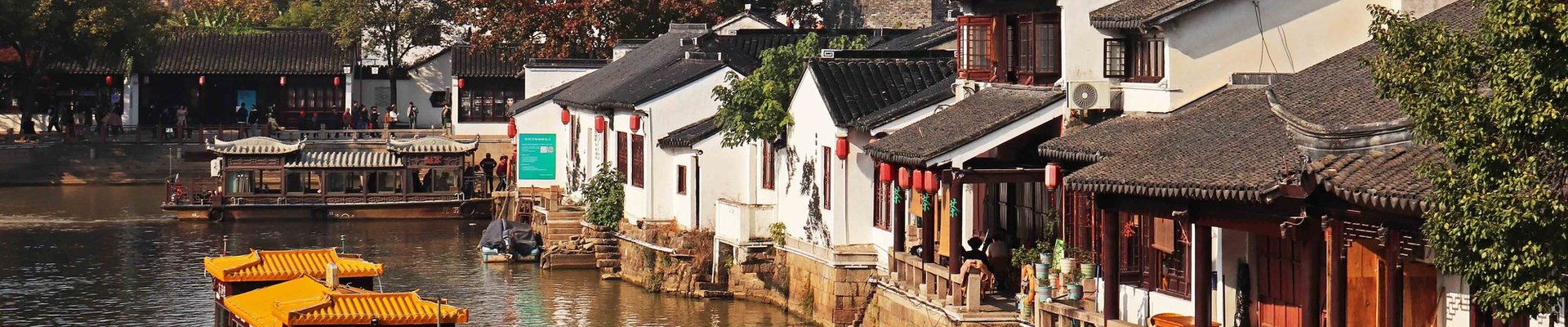
The Suzhou Ancient Canal Section: This refers to the main trunk of the Grand Canal that flows past the city.I walked over many bridges and walked along many canal sections in Shuzhou.
- The Historical Urban Area of Suzhou: The UNESCO designation explicitly includes the city's internal canal network, which is integral to the Grand Canal system.
- The Shantang Canal : a famous and beautifully preserved canal that served as a bypass and a major commercial street. That area can be very crowded in the evenings.Still worth a visit though as the Shantang area is a kind of second city centre and conveniently located next to a metro station.
- · Pingjiang Road: While the canal itself is the focus, the Pingjiang Canal that runs alongside this historic street is one of the best-preserved examples of the urban water network that fed into and from the main Grand Canal. The entire Pingjiang Road historic block gives context to canal-side life.I spent many hours in Pingjiang road and its adjacent side streets.I for my part liked the Pingjiang area far more than the Shantang area.However,both areas should be visited while in Suzhou.
- · Tongli + other water towns: While not directly on the Grand Canal trunk, these ancient towns near Suzhou developed their own extensive canal networks as part of the same regional water system and economy. They offer a glimpse into the "canal culture" that permeated the entire Yangtze Delta.I only visited Tongli and Zhujiajiao.( both watertowns are absolutely worth a visit)
- 3. Hangzhou Section (Part of the Jiangnan Canal & Southern Terminus)
Hangzhou marks the southern terminus of the Grand Canal. The canal brought immense wealth, making Hangzhou one of the greatest cities in the world during the Song Dynasty.
Official UNESCO subcomponents:
· The Hangzhou Ancient Canal Section: the final segment of the canal as it approaches the Qiantang River.
· The Historical Urban Area of Hangzhou: includes the urban canals and West Lake (broke my own record,walked more than 43.000 steps to walk around the inscribed UNESCO whs West Lake) , which were historically connected to and supplied by the Grand Canal.
· The Longhang Canal Section: A western branch of the canal in Hangzhou.
· The Chang'an Sluice Gate Tower: located slightly north in Haining, this is a magnificent and well-preserved example of a Qing-dynasty sluice gate complex. It controlled water flow and facilitated boat hauling.
Important Non-UNESCO but related sites in Hangzhou:
· The "New" Grand Canal in Hangzhou (The Modern Channel):
· Like in Yangzhou, the main trunk of the modern navigable canal has been widened and straightened. It runs through the city as a major industrial artery, distinct from the more scenic and historic sections preserved in the "Ancient Canal" parks.
· West Lake (Xihu) Cultural Landscape (a separate UNESCO World Heritage Site): While a separate listing, West Lake is historically inseparable from the Grand Canal. Its water levels were managed by canal engineers, and it was a destination for the elites and emperors who traveled via the canal. - I am sure that I ve forgotten some visited subcomponents of the Grand Canal in Hangzhou and Suzhou...I visited too many gardens and historical sites in above-mentioned areas.
The key distinction is between the official, protected heritage components (the ancient sections, specific sluices, and historic urban cores) and the living, modern infrastructure (the new channels) that continue the canal's economic role. The museums and related water towns, while not on the UNESCO list, provide the essential cultural and historical context that brings the story of the Grand Canal to life. Especially the new(2021) and extraterrestrialy massive Grand Canal Museum in Yangzhou is a must-see site.It is a modern, comprehensive museum with 13 exhibition halls that showcase the canal’s history, hydraulic technology, governance, and intangible cultural heritage. Highlights include a 100‑meter‑long scroll depicting the canal’s epic history, and the museum complex includes a Pagoda. It is designed to be an “encyclopedia” of the canal and has become a major cultural landmark in Yangzhou.An "entire " new city of restaurants,cafes,and exhibition halls has been built around that huge museum.I strongly advise to reserve online tickets via WeChat a few days earlier before an intended visited.The demand is huge ( especially during the weekends) and the new museum is now widely known all over China.
Comments
No comments yet.