
Time of the visit: the 20th and 21st of nov.,2025
All in all I spent almost 10 hours,(both late afternoons of my stay )in Fuzhou 's historical block+ 30 min.observing it from above in the nearby Dongbei Department Store(top floor,not easy to find,you have to go through a tea shop). I enjoyed every minute of my spent time there.
Sanfangqixiang (Three Lanes and Seven Alleys) in Fuzhou is a fantastic destination where you can immerse yourself in history. While some of the former residences and museums charge an entrance fee, most of the state-run historic houses don't; the area's unique atmosphere and the exteriors of its magnificent historic buildings can be enjoyed for free as you explore the ancient lanes and alleys. Just by strolling through SanFangQiXiang and entering quite a lot of the countless historic houses showcasing a wide range of topics of Fuzhou 's history like traditional food or its link with the maritime world for example, I got a good impression and overview of the historical and cultural block in Fuzhou City, which is often called a "living fossil of the ancient city street system" and an "architecture museum of the Ming and Qing dynasties".
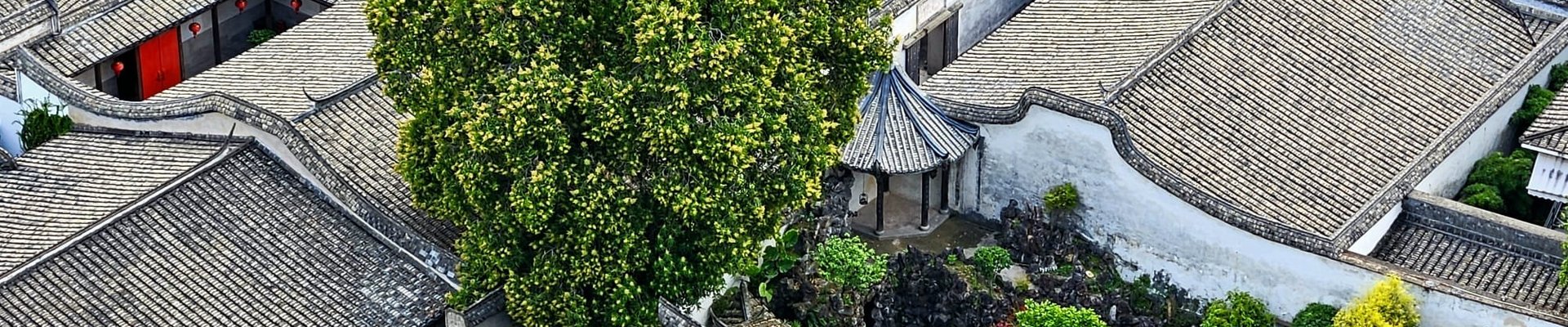
The district is structured with "three lanes" (Yijin, Wenru, and Guanglu) to the west and "seven alleys" (such as Yangqiao and Langguan) to the east, all branching off from the central and very touristy Nanhou Street which is packed with souvenir shops and crowded till 21/22.00. The area is characterized by its distinct gray roof tiles, wooden frames, and white walls, along with serene blue stone walkways and traditional saddle-shaped walls .
It is the largest and best-preserved cluster of Ming and Qing dynasty architecture in China.
All information boards are also in English.The Chinese did a pretty good job.
The large historic residences in Sanfangqixiang are often traditional compounds known as "dacuo". These were not ordinary homes but significant structures that formed the backbone of the neighborhood's layout.
A dacuo is a large residential unit, typically organized with multiple spans and courtyards. They were built by well-off families, such as officials or merchants, and their expansive courtyards and opulent details testify to past glory.
The formation of the Sanfangqixiang street blocks is based on the typology of these traditional dacuo and how they are grouped together.
Visiting these clan houses is a tranquil and immersive experience. The moment you step off the busy, tourist-filled main alley and pass through the gateway of a dacuo, the noise fades away. You are enveloped in a sense of history and peace. Walking through the quiet courtyards, you can easily imagine the scholarly discussions, family gatherings, and momentous historical decisions that took place within those walls.I visited the Xiaohuanglou residence in Huang Lane entering the building around 21.20 ( open till 22.00). Its garden features a two-story pavilion (described as a "small flower hall") and a "Half-Foot Wisteria Pavilion", which served as elegant spaces for literary gatherings, poetry, and musical activities.An absolutely magical place.I was the only visitor.Zhe entrance fee was 40 Yuan if my memory is correct.
In summary, the clan houses of Sanfangqixiang are not just buildings; they are the preserved soul of the district, telling the stories of the influential families who shaped Fuzhou's and even China's history. They are absolutely essential and fundamental to understanding why this place is a cultural treasure
From above, the famous "Three Lanes and Seven Alleys" layout becomes crystal clear. You can see how the lanes and alleys run parallel to each other, branching off from the main artery, Nanhou Street. This bird's-eye view reveals the ingenious and well-preserved urban structure that dates back to the Tang and Song dynasties. The most striking visual is the vast, undulating expanse of gray roof tiles. Interspersed among them, you can easily spot the distinctive "saddle walls" (also known as firewalls). These elegant, curved walls rise above the rooflines, a signature architectural feature designed to prevent fires from spreading. The pattern they create is mesmerizing.
Sanfang Qixiang presents a strong case for UNESCO World Heritage status, as it demonstrates Outstanding Universal Value through its unique urban plan, architectural excellence, deep cultural legacy, and successful conservation model.
SanFangQiXiang preserves the original layout of an ancient Chinese city . The residences showcase exquisite wood carvings, stone carvings, and gardens with pavilions and ponds, reflecting the highest craftsmanship of their eras.
What's more Sanfang Qixiang is a vibrant living community. The successful conservation efforts have revived community life, allowing traditional practices to continue alongside sustainable tourism, with numerous cafes,tea houses and craft shops adding to its dynamic atmosphere.IMO a whs doesn't need to be just death museum... SanFangQiXiang lives. The area is a vibrant community, not just a relic. You can encounter local opera performances put on by retirees in the old houses and find workshops making traditional delicacies. The serene maze of alleyways is a good blend of old and new.You can also find a classy bookstore (Useless time..what a name!) in one of its lanes.During the evening hours there are only a few people in the side streets illuminated by beautiful lanterns and populated by the local cats
Both my thumps go up.👍👍
Fuzhou is an attractive city which is quite unknown outside China and quite underrated among its foreign visitors.
The extension of SanFangQiXiang' main street ,the Nanhou Street, is practically the night market of Fuzhou .. you just have to cross the busy road.A very good one.
The Yantai hills is a historic hilltop park with colonial-era architecture and excellent city views.I strongly recommended to have tea set in the former American consulate.
Fuzhou was one of the original five treaty ports opened in 1842, it saw a significant foreign presence with significant foreign concessions).
Comments
No comments yet.