Connected Sites
-
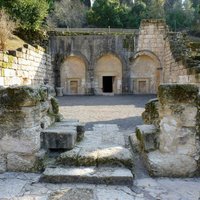
Painted directly onto the wall of a catacomb in the Necropolis in Hebrew/Aramaic text - "Yaakov Ha'Ger vows to curse anybody who would open this grave."
-
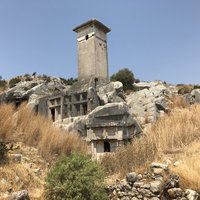
Inscription on the Lycian rock-cut tomb TL 75,"...If one places anyone else [therein] on top, then thi[s] qla will strike him – and Malija – and the oaths of the minti."
-
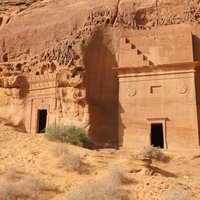
"This is the burial-niche which Wushuh daughter of Bagrat made for herself within the rock-tomb belonging to her and her daughters. Whoever opens it for himself or removes her from this burial-niche forever shall be liable to our lord Haretat, King of the Nabataeans, lover of his people, in the sum of a thousand Haretitle sela’s. And may Dushara, the god of our lord, and all the gods curse whoever removes this Wushuh from this burial-niche for ever."
-
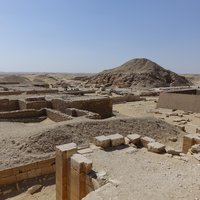
Mastaba of Idu: "As for every man who shall enter this tomb, without purifying himself as the purification of a god, one shall make for him a painful punishment."
-
A painted warning found on the masonry structure near the Tomb of Aesquillia Polla (or a contiguous funerary enclosure in that area, sometimes simply referred to as Sepulchre VI in some excavation reports) - "SI QUIS HIC MINXERIT AUT CACAVERIT HABET DEOS SUPRASCRIPTA(S) IRRITATOS" ("If anyone pees or shits here, may he have the wrath of the gods written above".). And "Cacator cave malum. aut si contempseris habeas. Iove iratum" = "Shitter, beware of the curse. If you scorn this curse, you will have an angry Jupiter". Found along an unnamed side street (vicolo) between Insula III.4 and III.5.
-
"May Dushara, the god of our lord, and all the gods curse whoever reads this inscription and does not bless the owner of the tomb. And may the gods curse whoever changes the name of the tomb or alters its character, or removes the bodies buried in it, or buries in it another corpse, or sells it, or mortgages it, or leases it, or performs any transaction upon it." (The Turkmaniyah Tomb) and "Anyone who places a body here, or removes one, or attempts to damage the tomb, may he receive the curse of the gods. He shall also pay a fine of four thousand Attic drachmas to the royal treasury" (Tomb of Sextus Florentinus)
-
"If you conceal this declaration and do not tell the people, may the Wise Lord become your slayer and may your progeny not come into being."
-
The Manumission of Arsinoa, slave of Xenon carved onto the Great Polygonal Wall, section 50 - "...If anyone should seize Arsinoa with a view to enslaving her, let both the seller Xenon and the guarantor Eudokos provide the deed of sale to the god under guarantee. If they should not provide the deed of sale to the god under guarantee, let them be liable according to the law of the city. And similarly let anyone who happens to be present have the power to seize Arsinoa (from them), since she is free, and let them not be accountable or subject to any charge or fine."